
Function and Meaning
Theo van Leeuwen is Professor of Language and Communication at the University of Southern Denmark, Emeritus Professor at the University of Technology, Sydney and Honorary Professor at the University of New South Wales and the Australian Catholic University. He has published widely in the areas of visual communication, multimodality, and critical discourse analysis and co-founded the journals Social Semiotics and Visual Communication. His latest books are The Semiotics of Toys and Games (with Staffan Selander), Multimodality and Identity and Multimodality and Time.

Plenaries
Prof. Theo van Leeuwen – University of Southern Denmark

Dr Jing Hao – Pontificia Universidad Católica de Chile
Rethinking protolanguage
Dr Jing Hao is an Assistant Professor at the Pontificia Universidad Católica de Chile (PUC). She previously held postdoctoral research fellowships at PUC and the Hong Kong Polytechnic University, after completing her PhD in Linguistics at the University of Sydney. Her research publications focus primarily on text-based language descriptions and linguistic applications in literacy education. She is currently leading two research projects: one examines referring expressions in Chinese and Spanish from a comparative, text-based perspective (with Dr Beatriz Quiroz), and the other investigates the language development of a multilingual child (with Dr Lilián Ariztimoño and Dr Margarita Vidal).
-
In this talk, I present preliminary findings from a research project examining the language development of a child in a multilingual environment. Focusing on the child’s sign-making involving vocalisations between 7.5 and 10.5 months of age, I address several theoretical and methodological questions that emerged during the early stages of the project. This work has been developed in close collaboration with Dr Lilian Ariztimuño.
First, although Halliday’s (1975) model of protolanguage, particularly its account of microfunctions, has been highly influential and informed later case studies (Painter, 1984; Torr, 1987), alternative interpretations of children’s early meaning-making are possible. These include privileging the child’s intersubjective reality (Halliday, 1978/2004) and foregrounding affect (Painter, 2003). This study identifies the ‘content’ of the child’s meaning-making by describing her social experiences, integrating both intersubjective and affective perspectives. This approach has proved more productive than applying categorical distinctions between microfunctions to the data.
Second, although protolanguage sign-making is inherently multimodal (Ngo et al., 2022), its paralinguistic resources have not been studied systematically. In this study, instances of sign-making are analysed as ensembles of semiotic resources, including body movements, facial expressions, and vocalisations. Resources from each mode, together with their rhythmic organisation, are analysed systematically. Body movements are described in terms of muscle engagement, intentional direction, motion, and speed (Ngo et al., 2022). Facial expressions include movements of the eyebrows, eyes, cheeks, and mouth (Feng & O’Halloran, 2012; Ngo et al., 2022). Vocalisations are analysed prosodically, recognising three emerging ranks of meaning-making: a sonority wave based on articulation of posture and contact, a melody unit based on pitch movement (particularly the voice qualities as described in Ariztimuño, 2024, 2025), and an intermediate rank based on rhythm. This framework recognises that the child’s meaning-making involves the co-selection of resources across semiotic modes, links physical milestones with language development, and identifies the emerging role of vocalisations within the child’s sign-making repertoire.
Finally, I consider how the relationship between the child’s multisemiotic ensembles and social experiences can be conceptualised by treating experiential exploration and emotional states as simultaneous and equally important. I argue that although metafunctions, in the adult sense, have not yet developed, different strands of meaning nevertheless operate simultaneously from the earliest stages of multimodal sign-making.
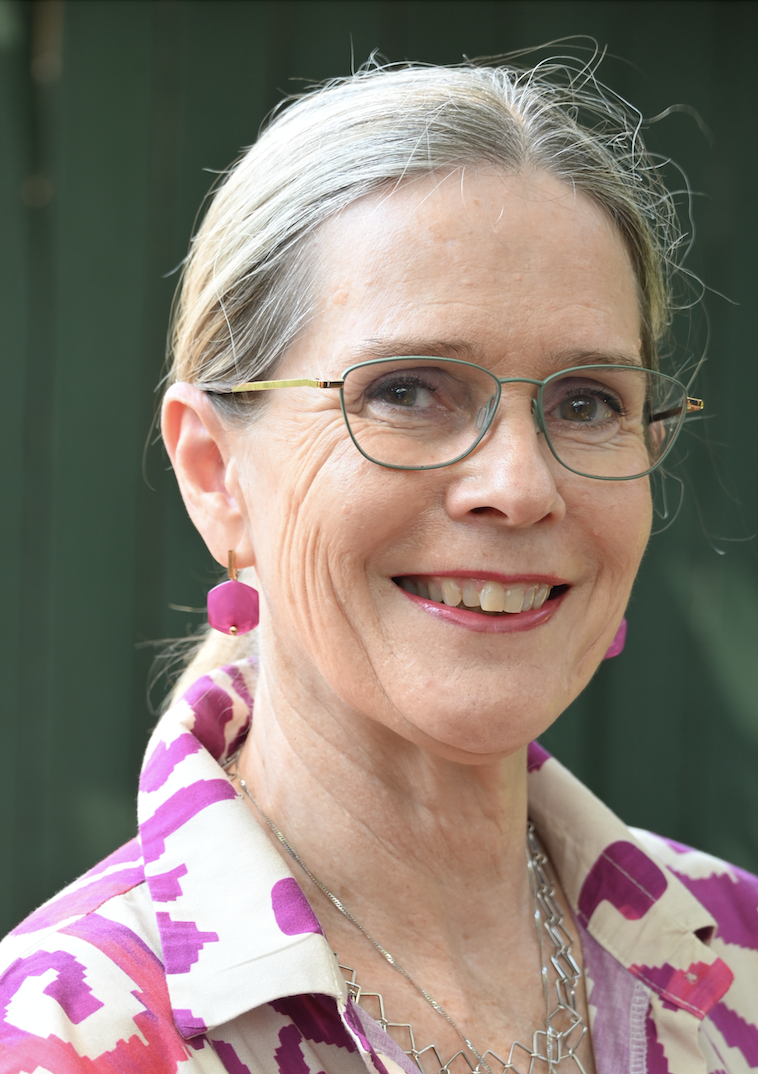
Prof. Louise Ravelli & A/Prof. Anikó Hatoss
The University of New South Wales
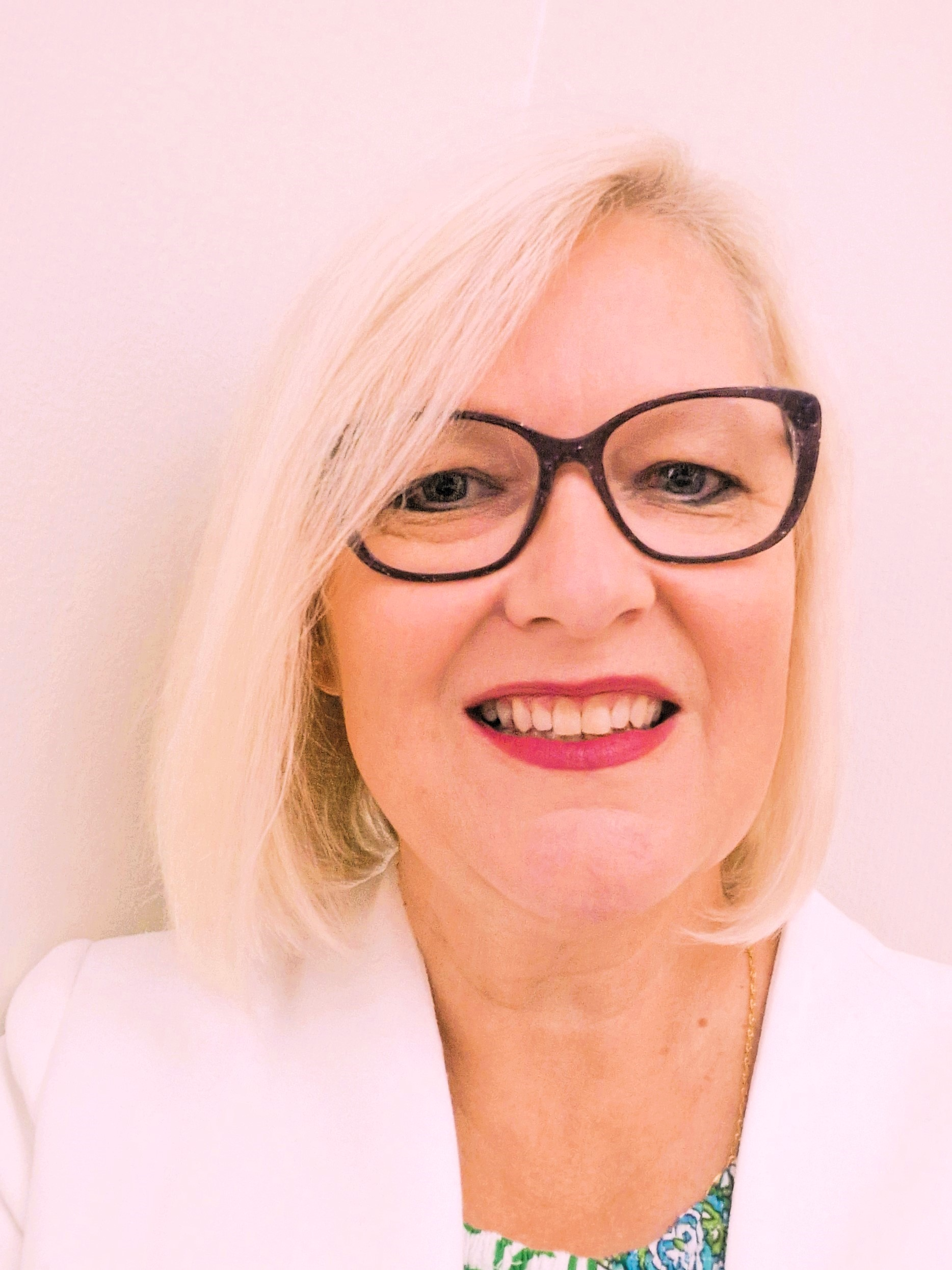
Boosting heritage languages: multimodality in urban and digital spaces
Louise Ravelli is Professor of Communication in the School of the Arts and Media at the University of New South Wales, Sydney and Joint Chief Editor of the journal, Visual Communication. She has a long-standing interest in multimodal communication, across language, image and the built environment, using social semiotics and multimodal discourse analysis. Books include Organizational Semiotics: Multimodal perspectives on organization studies (Routledge, 2023, with Theo van Leeuwen, Markus Hoellerer and Dennis Jancsary); Multimodality in the Built Environment: Spatial Discourse Analysis (Routledge, 2016, with Robert McMurtrie), and Museum Texts: Communication Frameworks (Routledge, 2006).
Dr Anikó Hatoss is Associate Professor in the School of Humanities and Languages, UNSW, Sydney. Her research is focussed on heritage language maintenance, family language planning and linguistic aspects of intercultural relations. Her innovations include developing the emotive-relational model of family language policy and theorising spatio-temporal dimensions of language maintenance and shift. Her research program on narratives, identities and intercultural relations has explored migrant and refugee narratives and brought attention to everyday racism. Her research program on urban multilingualism addresses linguistic social justice in the linguistic landscapes of Sydney. This work is published in a research monograph entitled “Everyday Multilingualism” (Hatoss 2023, Routledge). Currently she is the Lead CI of a Discovery project funded by the Australian Research Council (DP260102855) which aims to explore multilingual practices of Australian youth in diverse social and digital spaces of interaction).
-
While the family home as the key site of heritage language practice has been extensively researched, little is known about how rapidly changing environmental and social factors come together to influence language choices and shape family language practices (Curdt-Christiansen & Huang 2020; Lanza 2021). We align with the notion that language practices can be seen as ‘de facto grassroots language policy’ (Roberts 2023: 314) and respond to calls in the field to attempt to fully embrace the complexity of family language policy (Roberts 2023). Our project is designed to use novel methods to explore how new spaces of interaction, including public and digital spaces, impact family communication patterns and what opportunities they offer for ensuring that young Australians (i) learn their parental language (ii) continue to use it and (iii) see the value of these languages in Australia and beyond.
This presentation to ASFLA concentrates on heritage language use in public spaces. In the early stages of this project, we aim to first identify how heritage languages are used by children (7-14 years) outside the family home. We are recruiting families across diverse heritage language backgrounds, and use a survey, interview, and language diary (completed by the child) to ascertain if – and how – this takes place. Building on research in linguistic landscapes (e.g. Hatoss 2023) and spatial discourse analysis (e.g. Ravelli and McMurtrie 2016), we also aim to identify the affordances of public spaces which might encourage or inhibit the use of heritage languages.
The project responds to the ontological shifts in the field which recognise the reduced boundaries between private and public spaces (Lanza 2021) and uses the latest notions of ‘translocal’ and transnational spaces of language planning (Hatoss et al. 2024). Our focus on urban spaces brings to the fore questions about how societal attitudes towards migrants and their languages shape language choices and further contest monolingual ideologies in Australia (Hatoss 2023). We hope to connect these findings to the learning opportunities that might arise in public spaces for enhancing heritage languages and literacies, and thereby contribute to a more comprehensive understanding of family language practices beyond the home.
References
Curdt-Christiansen, X. L., & Huang, J. (2020). Factors influencing family language policy. In A. Schalley & S. Eisenchlas (Eds.), Handbook of Home Language Maintenance (pp. 174-193). Mouton de Gruyter.
Hatoss, A. (2023). Everyday multilingualism: Linguistic landscapes as practice and pedagogy. Routledge.
Hatoss, A., Nordstrom, J., & Lamb, T. (2024). Planning and teaching heritage languages in the translocal and digital space. Current Issues in Language Planning, 25 (5), 475-487.
Lanza, E. (2021). The family as a space: multilingual repertoires, language practices and lived experiences. Journal of Multilingual and Multicultural Development, 42(8), 763-771.
Ravelli, L., & McMurtrie, R. (2016). Multimodality in the built environment: Spatial discourse analysis. Routledge
Roberts, T. (2023). Family language policy in Swedish-English families: Rhizomatic conceptualisations. European Journal of Applied Linguistics, 11(2), 312-340.
Dr Lucy Macnaught
Auckland University of Technology
Driving AI in our linguistics lane: Using SFL principles to interact with and design AI
Dr Lucy Macnaught is a Senior Lecturer in the role of Learning Advisor at Auckland University of Technology. She collaborates with faculty to teach academic literacy within coursework and research programs. Her research interests include embedded approaches to academic literacy development, multimodal classroom metalanguage, and designing and integrating AI. Her book, Writing with Students, was shortlisted for the 2025 M.A.K. Halliday Book Prize.

-
Underlying this talk is the fundamental question of whether we want generative AI involved in the development of human consciousness. If we explore a cautious maybe, then we must consider what our tradition holds dear and what we want to carry into the future. Currently, those embracing generative AI as inevitable argue for change, such as universities reorientating towards learning processes and not just assessing end products. While such proposals seem grounded in a cognitive perspective on what learners do, recent research also highlights the importance of ‘domain knowledge’ when using AI. This is taken to mean the application of the knowledge and experience from our disciplines and professions. In this plenary, I will continue the argument that our tradition of SFS is well placed to focus on knowledge and that this is vital for designing AI tools and pedagogies which traverse the boundary between maker and made.
I start by outlining how our theoretical principles inform the view that learning with AI is still learning how to mean. Also, our genre pedagogies already provide a focus on both process and product. I then discuss the lack of practical guidance within influential university assessment policies, such as the two-lane approach. To better understand the dynamic options that students and lecturers face, I introduce a new topology of pedagogic orientations to AI. Examples from my role as a learning advisor and researcher show how the topology is useful for mapping shifts related to the following dimensions: the extent to which we are drawing on more established or emergent knowledge, and the extent to which meaning-making is more delegated or collaborative. Examples that are mapped onto the topology include image creation, vibe coding for a webapp, and designing a series of customised chatbots. These examples invite critique of genuine AI need and discussion of better modelling for human-driven AI processes. I close by launching the future workstreams proposed by the AI and Pedagogy sub-group within the Language and Literacy Education Network.
Prof. Pauline Jones
University of Wollongong
Gains, grifters and the ‘gold standard’: SFL and the national English curriculum, 15 years on.
Pauline Jones is Professor of Language in Education at the University of Wollongong. Drawing on systemic functional linguistics and genre-based literacy pedagogy, she has worked in teacher education and curriculum reform in Australia and the Asia-Pacific region. Her research focuses on understanding and supporting students’ literacy development and teacher professional learning, through a number of research projects around oral language, curriculum literacies, literacy transition points, and multimodality. She is co-author (with Beverly Derewianka) of Teaching Language in Context (OUP) as well as numerous publications deriving from research undertaken in collaboration with the profession.

-
This presentation reflects upon the progress of the Australian Curriculum: English, in particular the promise and challenges of the ‘knowledge about language’ strand. For educational linguists like Frances Christie, the inclusion of the explicit teaching of language (including grammar) for the first time in many years was a major gain. As Christie observed in 2005, “issues to do with knowledge about language remain very significant for teaching and learning”. In this curriculum, students would acquire a cumulative knowledge about language with which to negotiate the increasingly complex demands of subject-specific knowledge. Insights from systemic functional theory provided a coherent, contextualised approach together with a consistent metalanguage. This approach continues to provide teachers and students with opportunities to examine patterns of meaning at levels of language from whole text to word, as well as in image and multimodal representations.
Despite widespread recognition of the importance of teachers’ knowledge about language to this endeavour, the professional learning and resources necessary to ensure its success have never been delivered by curriculum authorities. While a handful of successful programs and projects developed by SF educational linguists have stepped up to meet this challenge, many schools have looked to commercial sources for support with the result that a multitude of programs and resources are in use. However, in the absence of system-wide explanations of the functional approach and contextually appropriate practical resources, conditions for the grift have opened up. In this second part of the talk, I examine some of the most problematic examples.
A further challenge to the implementation of the Language strand is the issue of what constitutes evidence in a milieu in which policy makers want a quick fix for educational problems. In response to these demands for quasi-experimental and randomised control trials, I survey several significant studies undertaken by the members of SFL community over a period of 40 years. In doing so, I present a different ‘gold standard’ for evidence, one that is theoretically principled, meticulously executed and accountable to the educational community. To conclude, I acknowledge the work of teachers, teacher educators and researchers engaged in the Language and Literacy Education Network (LLEN) who continue to advance the rich theory-practice nexus in Australia and elsewhere.
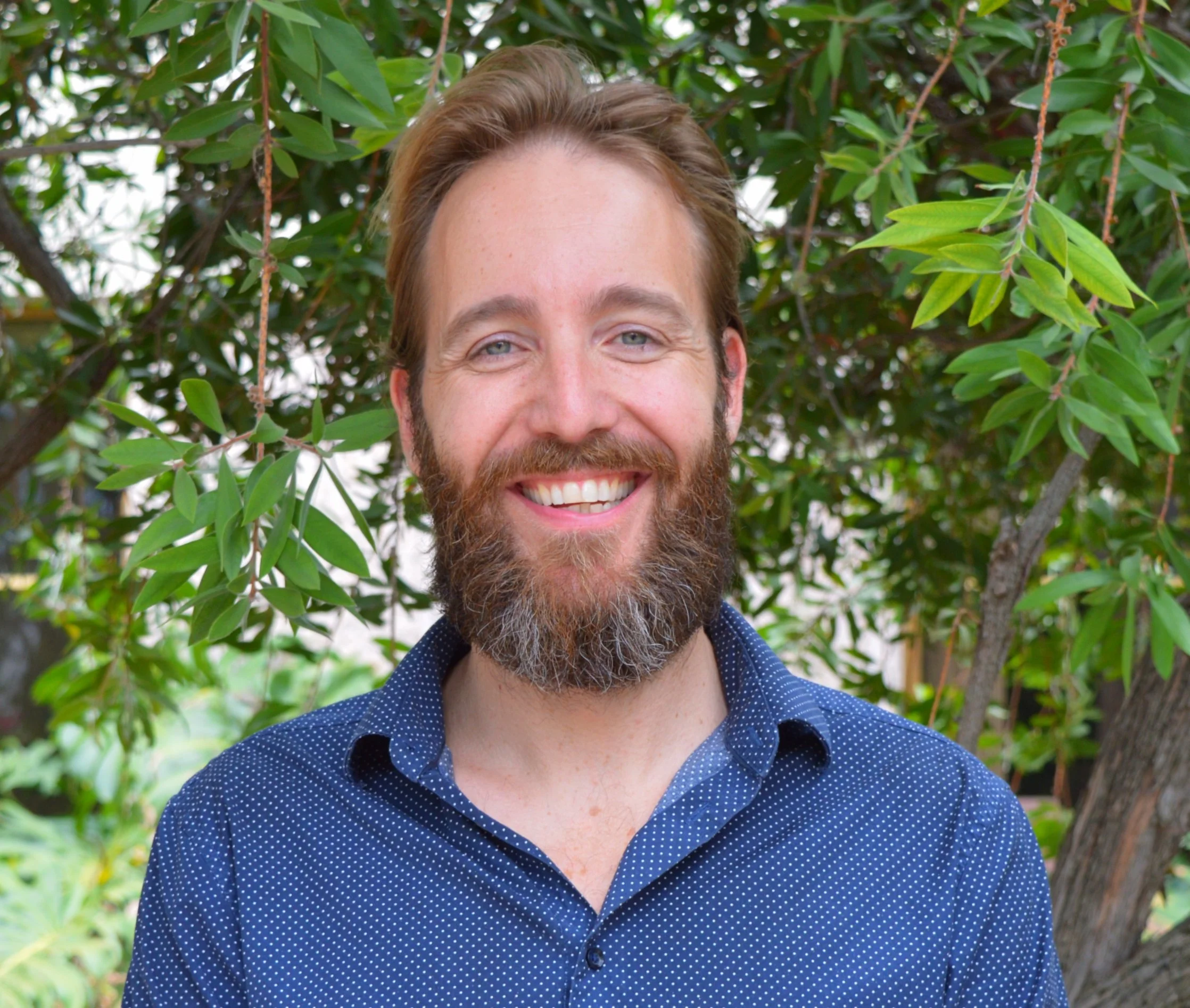
A/Prof. David Caldwell
University of Adelaide
Exploring language-in-action-in-sport: Insights from SFL
David Caldwell is an Associate Professor of English Language and Literacy in the School of Education at Adelaide University. David’s research applies Systemic Functional Linguistics to a range of contemporary contexts, with a focus on the role language plays in learning, identity and inclusion. He has published widely in the emerging field of sport discourse, including linguistic analyses of post-match interviews between sports people and journalists; novel descriptions and analyses of language-in-action in sport; and explorations of the evaluative language of crowds, commentators and coaches.
-
Language-in-action in sport: a challenging social context
In recent years, Systemic Functional Linguistics (SFL) has been applied to language-in-action in sport (e.g. Caldwell 2020, 2026; Doran at al. 2021; Ross et al. 2025). This work is emerging and expansive. It has drawn on a range of ‘on-field’ sporting contexts (e.g. Australian Rules football, volleyball, basketball and cricket), and has applied a range of SFL theorization, principles and analysis, including systemic phonology, mode, stratification, rank, interpersonal discourse semantics, individuation and genre. This paper will review this work to date, drawing on analysed examples of language-in-action in sport, with the aim to consolidate and celebrate this growing body of SFL appliable linguistics. In the spirit of the conference theme, this review will specifically foreground language-in-action in sport as itself a ‘challenging’ social context, comprising a marked action-oriented mode, as well as a marked tenor, where human participants materially and semiotically ‘challenge’ each other, and in turn, power and solidarity become highly visible. By way of conclusion, the paper will also consider the ‘challenging’ social context of applied linguistics more generally, and in particular, the challenges associated with attempting to build a global network of sports linguistics, including linguists from outside of SFL (see Caldwell 2026b).
References
Caldwell, D 2020, ‘Sounds of the game: An interpersonal discourse analysis of ‘on field’ language in sports media’, Discourse, Context & Media, vol. 33, https://doi.org/10.1016/j.dcm.2019.100363.
Caldwell, D, 2026a, ‘“Pass me the ball”: vocal sounds and language-in-action in sport’, Journal of World Languages, https://doi.org/10.1515/jwl-2025-0046.
Caldwell D, 2026b, ‘Applying linguistics to sport: My story of connection, collaboration, consolidation, and field building’, Annual Review of Applied Linguistics. doi:10.1017/S0267190526100294.
Doran, YJ, Caldwell, D, Ross, AS 2021 ‘Language in action: sport: mode and division of semiotic labour’, Language, Context and Text, vol. 3, no.2, pp. 274–301.
Ross, AS, Caldwell, D, Doran, YJ (eds) 2025, Language in sport: real-time talk in training and games, Routledge, New York.
Keynotes
A/Prof. Emilia Djonov
Macquarie University
Learning-oriented language in early childhood: A multimodal perspective
Emilia Djonov is Associate Professor at Macquarie School of Education, Macquarie University, Australia. She has expertise in critical and multimodal discourse analysis, social semiotics, systemic functional linguistics, early language and literacy, and multiliteracies education. Her collaborative research has examined semiotic software; children's engagement with transmedia narratives; young children's language and literacy learning in early childhood centres, homes and community settings; and citizen semiotics.


-
Building on Halliday’s (1993) language-based theory of learning, researchers have drawn on SFL to investigate how parents and educators support preschool-aged children’s engagement in ‘academic talk’ (Van Kleeck 2014) and thereby their development of learning-oriented language. As these studies have focused almost exclusively on language, very little is known about how non-verbal features of children’s interactions with others can foster the use and development of language as a vehicle for learning. To address this gap, the keynote first revisits SFL research on language learning in early childhood (e.g. Halliday 2004; Hasan 2009; Painter 1999; Torr 1998, 2004) to identify the conceptual foundations it provides for a broader multimodal social semiotic theory of learning. Through close analyses of selected interactions of 3-5-year-old children with their educators and peers, it then illustrates the value of a multimodal perspective for understanding their potential to foster learning-oriented language growth in early childhood. The keynote thus reframes the development of learning-oriented language as expanding children’s capacity to make meaning across semiotic resources.
References
Halliday, M. A. K. (2003 [1993]). Towards a language-based theory of learning. In J. Webster (Ed.), The Language of Early Childhood: Volume 4 in the Collected Works of M. A. K. Halliday (pp. 327-352). Continuum.
Halliday, M. A. K. (2003). The Language of Early Childhood: Volume 4 in the collected works of M.A.K. Halliday (edited by Jonathan Webster). Continuum.
Hasan, R. (2009). Semantic Variation, Meaning in Society and in Sociolinguistics, Volume 2 of the collected works of Ruqaiya Hasan (Edited by Jonathan Webster). Equinox.
Painter, C. (2001). Learning through language in early childhood. Continuum.
Torr, J. (1998). The development of modality in the pre-school years: Language as a vehicle for understanding possibilities and obligations in everyday life. Functions of Language, 5(2), 157-178. https://doi.org/https://doi.org/10.1075/fol.5.2.03tor
Torr, J. (2004). Talking about picture books: The influence of maternal education on four-year-old children’s talk with mothers and pre-school teachers. Journal of Early Childhood Literacy, 4(2), 181-210. https://doi.org/10.1177/1468798404044515
Van Kleeck, A. (2014). Distinguishing between casual talk and academic talk beginning in the preschool years: An important consideration for speech-language pathologists. American Journal of Speech-Language Pathology, 23(4), 724-741. https://doi.org/10.1044/2014_AJSLP-14-0032
Dr Thu Ngo
University of New South Wales
Intermodal analysis of film texts: A method
Thu Ngo is senior lecturer in Language and Literacy Education, University of New South Wales. In her role, she trains undergraduate primary school English teachers and provides professional learning workshops for primary and secondary English teachers in teaching multimodal literature, particularly filmic literature. Her research uses Systemic Functional Linguistics and Semiotics theory to conceptualise meanings of participating film semiotic resources such as paralanguage, music and sound effects.
Her current interest is in children’s literature adaptation, film semiotics, multimodality, and evaluative language.

-
Studies in both the Systemic Functional Linguistics (SFL) and film study traditions have largely employed the ‘shot-by-shot’ approach to film analysis (Bateman & Schmidt, 2012; Bateman & Wildfeuer, 2016; Bateman, Wildfeuer, & Hiippala, 2017; Feng & O'Halloran, 2013; Ryan & Lenos, 2012; Wildfeuer, 2014). A shot is a visual editing unit, not a unit of meaning; therefore, using a shot as a unit of analysis makes the visual image an analytic constraint. It does not account for other filmic semiotic resources that function across shots such as music.
This paper proposes a method for intermodal analysis of narrative film texts, involving three steps: (1) identification of the smallest narrative building block as a unit of analysis, (2) identification of the rhythmic texture of the smallest narrative building block and (3) intersemiotic analysis. The paper argues that the smallest narrative building block is a micro phase, which is the immediate environment for semiotic resources to function. The rhythmic texture of the micro phase can either be monophonic or polyphonic. Depending on the rhythmic texture of the microphase, different tiers of analysis will be conducted for intermodal analysis. The paper illustrates this method step by step, using various examples from filmic adaptations of children’s literature.
Dr Lorenzo Logi
University of New South Wales
How LLM AI Chatbots deploy interpersonal resources to negotiate discourses of prejudice and oppression
Lorenzo Logi is a sessional academic based in Sydney and working across Australian universities including UNSW, Sydney University, Macquarie University and Charles Darwin University. His research interests include linguistics, humour, multimodality and new media, and his most recent book, Characters and Surprises in Stand-up Comedy was published in 2025 by Bloomsbury.

-
As large language model (LLM) chatbots come to mediate billions of everyday exchanges, they have become consequential, yet largely unexamined, sites for the negotiation of prejudice, oppression and social tension. This paper takes up ASFLA 2026’s call for appliable linguistics in challenging social contexts by bringing the renovated tenor model (Doran, Martin & Zappavigna, 2025) to bear on how chatbots respond to transgressive prompts: user turns that seek harmful, hateful or deceptive content, or that attempt to circumvent safety constraints. Building on Zappavigna’s (2025) corpus-based analyses of chatbot discourse, the research consolidates and extends tenor description into human-AI interaction, analysing the systems of positioning, orienting and tuning, together with the digital paralanguage of emoji and formatting, through which chatbots enact authority, affiliate or disaffiliate with users’ values, and calibrate affective stance.
The analysis draws on the WildChat corpus of real-world human-ChatGPT conversations, combining large-scale processing of its 1.5-million-conversation toxic subset with close systemic functional analysis of a stratified sub-corpus. Preliminary findings carry a methodological warning for corpus-based digital-humanities work: automated toxicity flags are strikingly imprecise. Only around half of flagged exchanges are genuinely transgressive, and the corpus’s apparent “compliance” with harmful requests is substantially an artefact of misclassification. Chatbot refusal, by contrast, reliably indexes genuine transgression and is semiotically rich. Reframing the corpus as a graded, selective site of interpersonal negotiation, the paper demonstrates the continuing appliability of SFL to urgent questions of AI safety, ethics and design.
References
Doran, Y., Martin, J.R., & Zappavigna, M. (2025). Negotiating Social Relations: Tenor Resources in English. University of Toronto Press.
Martin, J.R., & White, P.R.R. (2005). The Language of Evaluation: Appraisal in English. Palgrave Macmillan.
Zappavigna, M. (2025). ‘I’m sorry Dave, I’m afraid I can’t do that’: Moral regulation in refusals by LLM chatbots. New Media & Society.
Zappavigna, M., & Doran, Y. (2025). Emoji as interpersonal resources in LLM chatbot conversations: A social semiotic analysis of tenor and affiliation in human–AI interaction. Social Semiotics, 1–22.
Zhao, W., et al. (2024). WildChat: 1M ChatGPT interaction logs in the wild. Proceedings of ICLR 2024.
Dr Lilián I. Ariztimuño
University of Wollongong
Do we always like the beautiful and kind, and dislike the ugly and nasty? Enriching attitudinal descriptions in spoken communication
Lilián I. Ariztimuño is a lecturer in English as a Global Language and Global Communication at the University of Wollongong. Her primary research interest lies in how sound contributes to meaning‑making in spoken English and the implications this has for teaching English as an additional language. She has published research on English sound semiosis in Language, Context and Text and was invited to co‑edit a Special Issue on sound and meaning for the Journal of World Languages, where some of her most recent work has also appeared. Lili enjoys collaborating with peers on projects that explore how sound contributes to meaning in context, spanning areas such as early language development, storytelling, health discourse, and the communication practices of people with disabilities.
-
In this talk I foreground a key aspect to consider when analysing, describing and theorising attitudinal meanings in spoken communication: its phonological expression. This consideration is methodologically crucial also for any attempt to provide complete descriptions of any spoken text, as every time we speak, either with an imagined audience (one-way contact) or with an actually present one (two-way contact), we use our vocal meaning-making potential through the aural channel (Martin, 1992; Matthiessen, 2009). However, the sound-specific characteristics of this channel, that is, meaning-making resources at phonological stratum in systemic functional linguistic terms, are not always considered or thoroughly described when we work with spoken texts.
In the case of attitudinal meanings, I draw attention to how we can share a more comprehensive picture of spoken language resources, both verbal and vocal, that enact affectual meanings. I argue for the inclusion of ‘vocalisation’ as a realisation resource that can inscribe affectual meanings together with or independently from ‘verbiage’ (Ariztimuño, 2026). I first illustrate this with storytelling examples that show how emotions, realised in vocalisation and described in terms of affect (Martin, 2000), associate with the evaluations of aesthetic and behavioural characteristics of the story characters, realised in verbiage and classified in terms of positive and negative appreciation and judgement. Furthermore, I present cases that explore inter-stratal relations between attitudinally uncharged verbiage and affectual vocal profiles to raise an important question about how much meaning could be lost or overlooked if solid methodologically and theoretically grounded descriptions of sound semiosis are left out of our spoken texts analysis and accounts.
Ariztimuño, L. I. (2026). How do we communicate emotions in spoken language? Modelling affectual vocal qualities in storytelling. Journal of World Languages, 12(1), 28–68. https://doi.org/10.1515/jwl-2025-0041
Martin, J. R. (1992). English text: System and structure. Benjamins, Amsterdam.
Martin, J. R. (2000). Beyond exchange: appraisal systems in English. In S. Hunston, & G. Thompson (Eds.), Evaluation in text: Authorial stance and the construction of discourse (pp. 142-175). Oxford University Press.
Matthiessen, C.M.I.M. (2009). Multisemiosis and context-based register typology. In E. Ventola, & M. Guijarro (Eds.), The world told and the world shown: Multisemiotic issues (pp. 11-38). London: Palgrave Macmillan.
Dr Jennifer Blunden
Bringing the impact of museum visits into view: a new role for SFL
Jennifer Blunden works and researches in the museum and cultural heritage sectors, with a focus on issues of communication, access and public engagement. She gained her PhD in 2016 from the University of Technology Sydney with a linguistic and sociological study of museum exhibitions. Her research interests include museums and their social role and impact; the role played by language and other modes in shaping visitor experience, understanding and connection; the role of discourse in the construction of disciplinary knowledge, identity and practice; and the application of social semiotic theories of meaning-making to museum research, education and practice. She is currently an Industry Fellow at the University of Technology Sydney and teaches in the Museum Studies and Art Curatorship programs at the University of Sydney.


-
Museums have always been concerned that the programs and activities they present have impact on visitors and the broader community, but in the increasingly challenging and uncertain times of today, the expectation and often the requirement to show impact is ever more pressing. Museums have also long been – and are still – diligent in collecting visitor feedback, for example through comment books and cards, surveys, focus groups and more recently online reviews and social media ‘engagement’. Yet much of this feedback is ‘just collected’ or used to add anecdotal or broad thematic support to reports, proposals and decisions of various kinds. Rarely, if ever, has it been analysed in a way that brings specific patterns of impact into view, particularly across multiple feedback formats and modes.
This keynote considers the potential of an SFL-informed methodology to provide such an analysis. Drawing in particular on the Appraisal Framework, it uses a data set of comment cards and online reviews gathered as part of a pilot study currently underway at Sydney’s Hyde Park Barracks Museum. The former convict barracks, now a social history museum, re-opened in 2019 with a bold, community-led re-interpretation of Sydney’s convict history that foregrounds the role of the convict labour force in enabling ‘the brutal dispossession of Aboriginal peoples’ (MHNSW 2019). The study seeks to develop a methodology that can ‘capture’ and accumulate different kinds of impact (eg, emotional, cognitive, transformative, social) – in this case, of a museum visit but the methodology has relevance to many other contexts.
-
Appliable by design: SFL as a framework for institutional practice
SFL defines itself as an appliable theory of language, one in which the relationship between linguistic description and social intervention is not incidental, but constitutive. Yet appliability is most often framed as something linguists extend outward: to learners, to classrooms, to communities in need of access and equity. Less often do we examine what happens when SFL is turned inward, when the theory is applied to the institutions we inhabit and the practices we design within them.
This talk argues that SFL equips academics with a principled and portable framework for institutional action, one that makes visible the linguistic work already embedded in teaching, supervision, research leadership, and community engagement, and positions that work as theorised scholarly practice rather than institutional service. This is the work Positive Discourse Analysis was designed to do: not exposing semiosis in the service of power alone, but documenting and enacting it in the service of solidarity and change. From this orientation, I explore what it means to use SFL as a framework for institutional practice, diagnosing semiotic barriers to participation and redesigning the conditions under which voice, identity, and legitimacy are made available to those on the margins of institutional life: doctoral candidates navigating unfamiliar research cultures in a language other than their own, language learners locked out of disciplinary knowledge, and communities whose discourses enact solidarity and resist the deficit narratives imposed upon them.
This argument is developed through three sites of practice. The first examines how grammatical metaphor, as both a research focus and a pedagogical intervention, illustrates the realisation of linguistic description as enabling practice, from the Grammatical Metaphor Word List to AI-assisted identification tools. The second explores supervisor-candidate co-authorship and the thesis-by-publication as forms of genre apprenticeship: practices through which doctoral candidates are enculturated into the registers, stances, and authorial identities of their disciplinary communities. The third examines co-designed research with neurodivergent communities as a space where lived expertise and linguistic analysis converge, working toward institutions that accommodate rather than pathologise neurodivergent experience. What these interventions share is a commitment to expanding access to valued meaning-making resources, and to redesigning the conditions under which that access is granted or withheld. I propose that such work, though typically labelled as service or leadership, constitutes a theoretically grounded and coherent research program in its own right: one in which appliability is not an aspiration, but a daily enactment, concerned with how meaning circulates, how identities are legitimated, and how institutions can be redesigned to expand participation across the social and linguistic boundaries that so often determine who gets to speak, and who is heard.
The talk closes by posing a question that SFL is uniquely positioned to ask: if language is the primary resource through which knowledge is built, identities are formed, and institutions are reproduced, what does it mean to wield that resource with full theoretical awareness, in every context we inhabit?
-
I will begin by investigating to which degree meaning and function have been conflated in Halliday’s work, to then define function and meaning as two distinct, but always co-present dimensions of discourse and practice. I will argue that, in contemporary multimodal communication, functionality becomes increasingly homogeneous across many different contexts, while meaning becomes increasingly fragmented and diverse, yet continues to underpin the values that constitute people’s identities. This account will be set against a broader evocation of the rise of functionalism in modernity, and its retreat from prominence in postmodern theory and practice.
Dr Cassi Liardet
Macquarie University
Dr Cassi Liardet is a Senior Lecturer in the Department of Linguistics at Macquarie University, where she teaches in the postgraduate Applied Linguistics and TESOL program. Her research draws on Systemic Functional Linguistics to investigate academic literacy, grammatical metaphor, and doctoral pedagogy. She co-developed the Grammatical Metaphor List, a corpus-informed tool currently being extended through AI-assisted development. Her work on doctoral pedagogy, including supervisor-candidate co-authorship and thesis-by-publication practices, has informed institutional conversations about HDR policy and practice. She is co-founder of the Global Genre Research collaborative and leads The Shape of Australian Higher Degree Research, a large-scale empirical study mapping PhD thesis and publication practices across Australian universities.